American Cockroaches
Periplaneta americana
The largest common roach — a sewer traveler and basement dweller.
The largest common house-invading roach in the US. Prefers warm, humid areas like sewers, basements, and boiler rooms.
At a glance
- Category
- insect
- Seasonal activity
- Year-round; outdoor activity peaks in warm, wet months.
- Life cycle
- Adults up to 2 inches long; live over a year and produce ~150 offspring.
- Common locations
- Basements · Sewers · Boiler rooms · Mulch beds · Palm trees
- Also known as
- palmetto bug, waterbug
Entity relationships
Parent entity
Related entities
Key attributes
Risk profile
A quick read on how this pest scores across the four factors that matter most.
- Health risk
- Moderate
- Property damage
- Low
- Spread potential
- Moderate
- Treatment difficulty
- Moderate
Seasonal activity
When this pest is most active across the calendar year.
Identification & habitat
Confirm what you're dealing with before choosing a treatment path.
How to identify
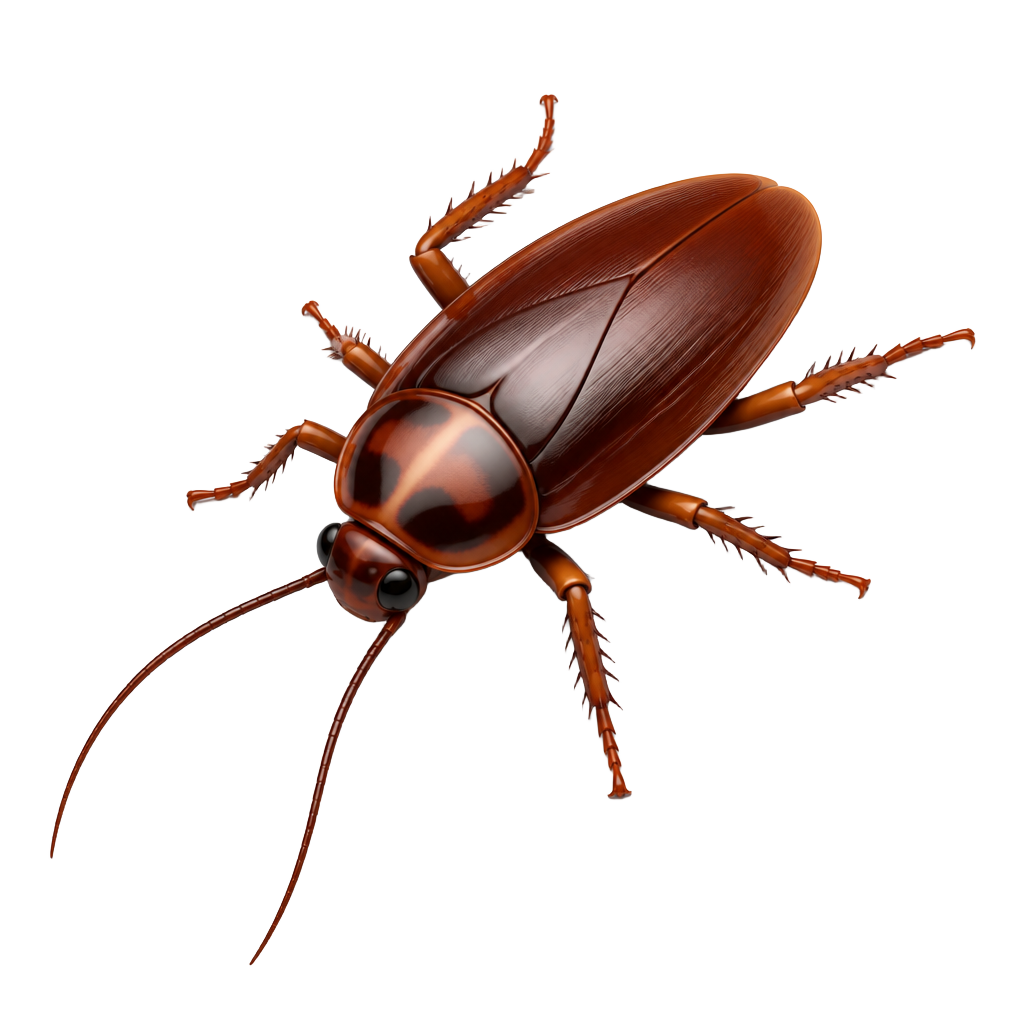
- Reddish-brown body with pale yellow figure-8 on pronotum
- Wings extend past the abdomen in males
- Can fly short distances in warm weather
Where they live
- Sewers
- Basements
- Steam tunnels
- Palm trees
- Mulch beds
Signs of infestation
- Large reddish-brown roaches 1.5 to 2 inches
- Egg cases glued to surfaces
- Sightings near drains at night
Behavior
- Enters buildings through floor drains and utility penetrations
- Prefers 70°F+ humidity
Reproduction
Females glue egg cases to hidden surfaces; produce 6–90 cases per lifetime.
Life cycle timeline
Every treatment plan must reach every stage — miss one, and the population rebuilds.
- Stage 145 days
Ootheca
Glued to hidden surfaces near warmth.
- Stage 26–20 months · 10–13 molts
Nymph
Wingless; darker than adult.
- Stage 31–2 years
Adult
Wings and full pigmentation.
Health risks
- Asthma trigger
- Bacterial contamination
Property damage
- Contamination of food storage areas
Inspection checklist
- Screen every floor drain
- Inspect steam tunnels, boiler rooms, and utility chases
- Reduce mulch depth to under 2" near foundation
- Trap under sink cabinets and near sump pumps
Professional treatment
The proven, licensed protocol our specialists use in the field.
- 1
Exterior perimeter granular bait
Reduces population pressure from harborage.
- 2
Drain treatment and screening
Bio-foam drain treatments; install screens or one-way valves.
- 3
Void and crawlspace dusts
Long residual desiccant dusts in wall voids.
- 4
Moisture correction
Fix leaks and improve crawlspace ventilation.
You can handle
- Reduce mulch and clear leaf litter near foundation
- Screen floor drains and vents
Get professional help
- Repeated indoor sightings
- Commercial kitchens or apartment buildings
What changes the price
- Building size
- Access to sewer/drain systems
- Landscape harborage
- Moisture conditions
Prevention
Small habits keep american cockroaches from coming back after treatment.
Prevent american cockroaches
- Screen floor drains and vents
- Reduce mulch depth near the foundation
- Fix moisture in basements and crawlspaces
Common myths
Bad advice makes infestations worse — here's the truth.
'Palmetto bugs' aren't roaches.
Palmetto bug is a regional name for the American cockroach.
Indoor sightings mean a filthy home.
These roaches often enter through sewers, mulch, or utility lines regardless of housekeeping.
Frequently asked
Answers to the questions homeowners ask most about american cockroaches.
Do American roaches infest inside walls?
They prefer basements, crawlspaces, and drains but can nest in wall voids near steam or plumbing.
Can they really fly?
Yes — short glides, especially in warm humid weather near lights.
How is treatment different from German roach programs?
Focus shifts to exterior perimeter, drains, and voids rather than kitchen harborage.
Call a pro immediately if…
- Sightings from drains or basements
- Roaches inside multi-family utility rooms
Answer your next question
Related Services
Related Calculators
Related Locations
Ready when you are
Deal with american cockroaches the right way
Get a licensed pest specialist to handle it — often same-day, with a satisfaction guarantee.