Termites
Isoptera
The silent architect of $5 billion in annual US structural damage.
Termites cause an estimated $5 billion in structural damage in the US each year. Colonies feed 24/7 on cellulose, often unnoticed until damage is severe.
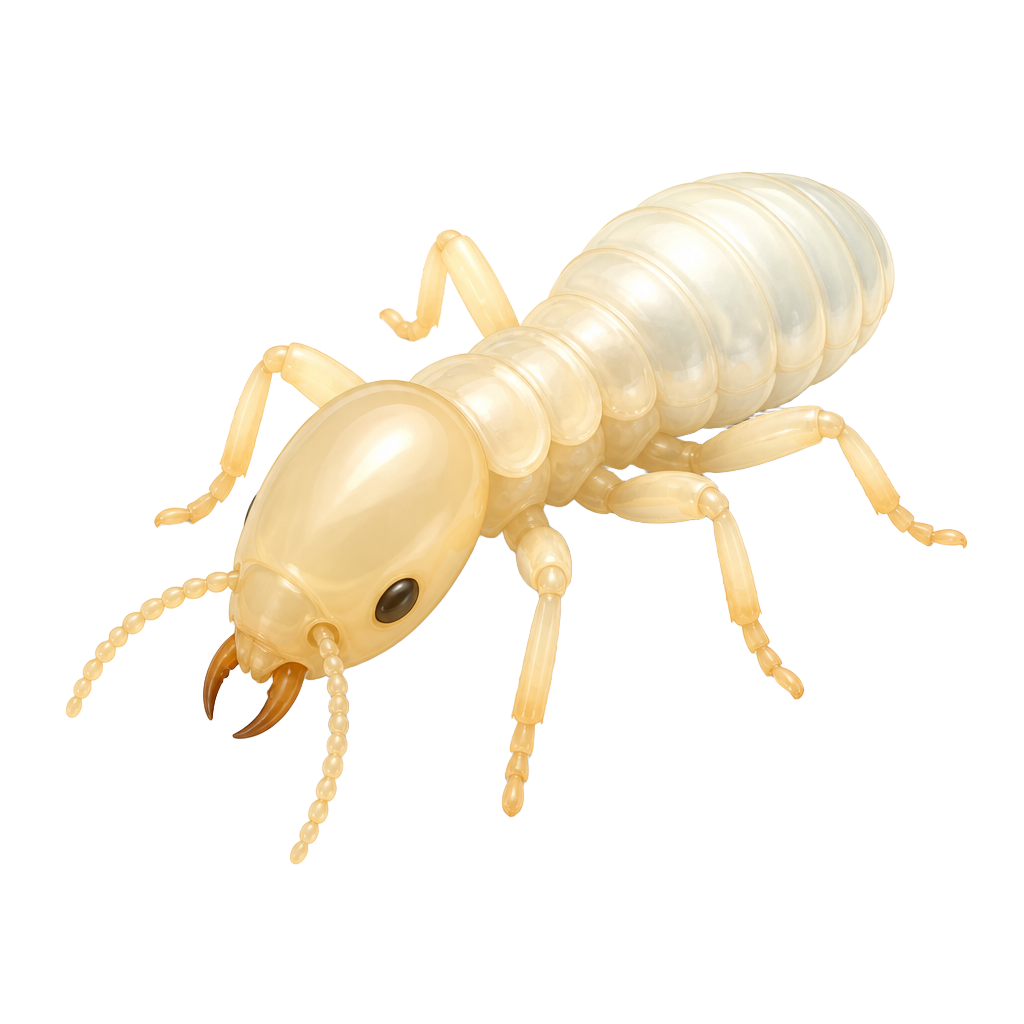
At a glance
- Category
- insect
- Seasonal activity
- Swarming peaks in spring; feeding continues year-round.
- Life cycle
- Colonies include workers, soldiers, and reproductives (kings, queens, alates). Mature colonies contain millions of members.
- Common locations
- Foundation walls · Crawlspaces · Attics · Wooden decks
- Also known as
- white ants
Entity relationships
Parent entity
Child entities
Related entities
Key attributes
Risk profile
A quick read on how this pest scores across the four factors that matter most.
- Health risk
- None
- Property damage
- High
- Spread potential
- High
- Treatment difficulty
- High
Seasonal activity
When this pest is most active across the calendar year.
Identification & habitat
Confirm what you're dealing with before choosing a treatment path.
How to identify
- Straight bead-like antennae
- Uniform waist (no pinch)
- Equal-length wings on swarmers
- Cream-colored workers, dark reproductives
Where they live
- Foundation walls
- Crawlspaces
- Attics (drywood)
- Wood-to-soil contact
- Wet framing
Signs of infestation
- Mud tubes on foundation walls
- Discarded wings near windows
- Hollow-sounding wood
- Sagging floors
Behavior
- Feed 24/7 on cellulose
- Communicate via pheromones
- Swarm to establish new colonies
Reproduction
Queens can live 25+ years; mature colonies produce thousands of swarmers each spring.
Life cycle timeline
Every treatment plan must reach every stage — miss one, and the population rebuilds.
- Stage 126–30 days
Egg
Laid continuously by the queen.
- Stage 2Several months
Nymph
Develops into worker, soldier, or reproductive caste.
- Stage 31–5 years worker · 25+ years queen
Worker / Soldier / Alate
Specialized adult castes.
Property damage
- Hollowed structural wood
- Weakened floors and framing
- Damaged insulation
Inspection checklist
- Probe sill plates and crawlspace framing with a screwdriver
- Inspect exterior foundation for mud tubes
- Look at attic rafters for drywood pellets
- Check window sills for discarded wings after warm rains
Professional treatment
The proven, licensed protocol our specialists use in the field.
- 1
Full inspection + graph
Detailed diagram of activity, damage, and conducive conditions.
- 2
Bait system OR liquid barrier
Sentricon® in-ground stations or Termidor® non-repellent trench-and-treat.
- 3
Structural fumigation
Vikane® tenting for whole-structure drywood infestations.
- 4
Annual re-inspection + warranty
Ongoing monitoring under a renewable service agreement.
You can handle
- Eliminate wood-to-soil contact
- Fix leaks and grade soil away from foundation
- Schedule annual professional inspections
Get professional help
- Any confirmed activity
- New construction pre-treatment
- Real estate WDO inspections
What changes the price
- Linear foot of foundation
- Bait vs. liquid
- Species (Formosan costs more)
- Structural additions
Prevention
Small habits keep termites from coming back after treatment.
Prevent termites
- Keep 6-inch gap between soil and wood siding
- Repair leaking gutters and downspouts
- Store firewood away from foundation
- Schedule annual inspections
Commonly confused with
Quick tells to separate termites from lookalikes.
vs. Flying ants
Pinched waist and unequal wings. Termites have straight sides and equal wings.
Common myths
Bad advice makes infestations worse — here's the truth.
Brick or concrete homes are termite-proof.
Termites tube up any surface to reach the wood framing above.
Homeowner's insurance covers termite damage.
Standard policies exclude termite damage — active service contracts are the only meaningful protection.
Frequently asked
Answers to the questions homeowners ask most about termites.
How fast do termites damage a home?
Native subterraneans take years; Formosan colonies can cause serious damage in as little as 6 months.
Is bait or liquid better?
Both are proven; bait wins when soil disruption or landscaping matters, liquid when speed is critical.
Do I need annual inspections?
Yes — early detection is the single largest factor in limiting damage cost.
Call a pro immediately if…
- Mud tubes on foundation
- Winged swarmers indoors
- Blistered floors or hollow-sounding wood
Answer your next question
Related Services
Related Costs
Related Calculators
Related Locations
Related Questions
Ready when you are
Deal with termites the right way
Get a licensed pest specialist to handle it — often same-day, with a satisfaction guarantee.