Ants
Formicidae
The most reported household pest in the United States.
Ants are social insects that invade homes searching for food, water, and shelter. Over 700 species live in the United States, but a handful account for most household infestations.
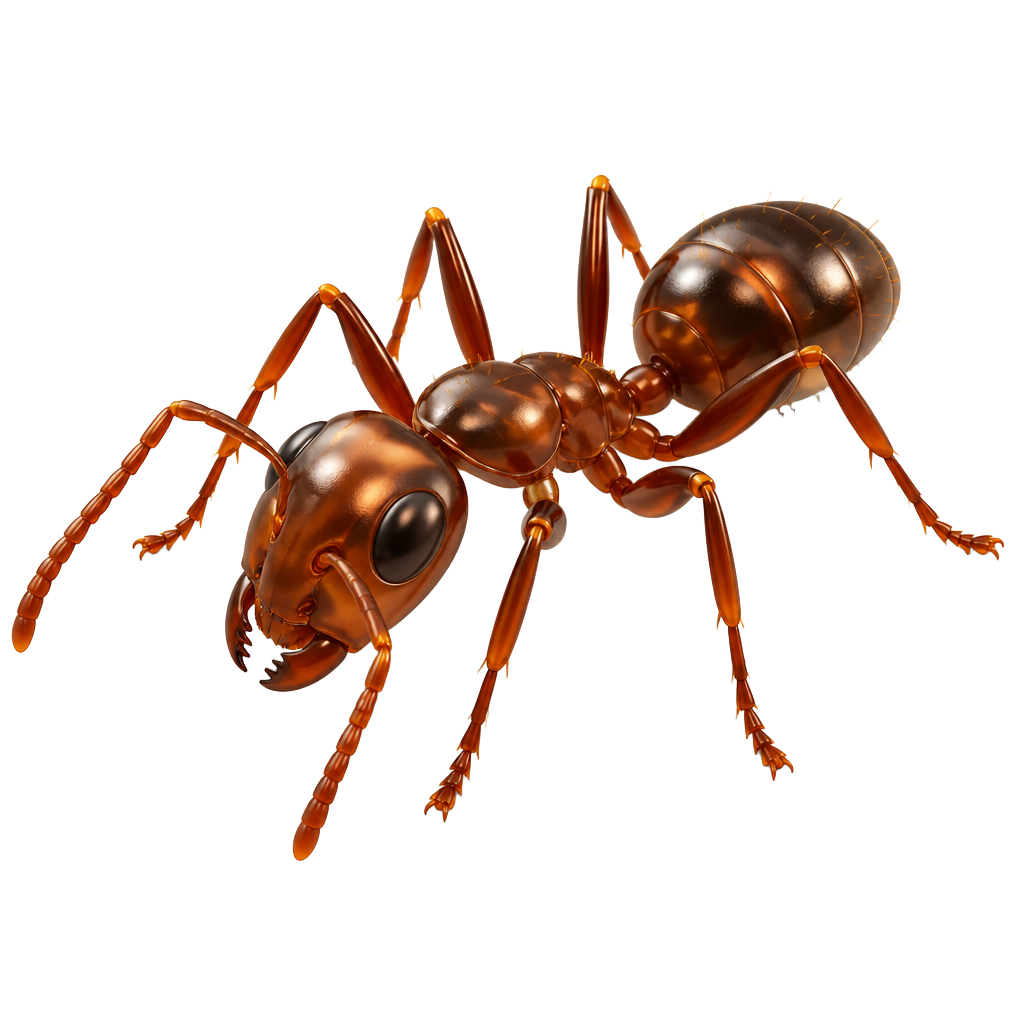
At a glance
- Category
- insect
- Seasonal activity
- Peak: Spring through early fall. Some species active year-round indoors.
- Life cycle
- Egg → Larva → Pupa → Adult. Queens can live 15+ years and produce thousands of workers.
- Common locations
- Kitchens · Bathrooms · Pantries · Wall voids · Exterior perimeter
- Also known as
- house ants, sugar ants
Entity relationships
Parent entity
Child entities
Related entities
Key attributes
Risk profile
A quick read on how this pest scores across the four factors that matter most.
- Health risk
- Low
- Property damage
- Moderate
- Spread potential
- High
- Treatment difficulty
- Moderate
Seasonal activity
When this pest is most active across the calendar year.
Identification & habitat
Confirm what you're dealing with before choosing a treatment path.
How to identify
- Segmented body with clear waist (petiole)
- Elbowed antennae
- Larger head-to-body ratio than termites
- Winged swarmers have two pairs of unequal wings
Where they live
- Wall voids
- Under slabs
- Behind baseboards
- Landscape mulch
- Rotting wood
Signs of infestation
- Visible trails along walls or counters
- Small piles of dirt near cracks
- Winged swarmers indoors
- Rustling sounds in walls (carpenter ants)
Diet
- Sugars and honeydew
- Proteins and grease
- Seeds
- Other insects
Behavior
- Lay chemical trails to food
- Split colonies (budding) when disturbed
- Farm aphids for honeydew
Reproduction
Nuptial flights produce new queens; established colonies mature in 1–3 years.
US distribution
All 50 states; species mix varies by climate.
Life cycle timeline
Every treatment plan must reach every stage — miss one, and the population rebuilds.
- Stage 17–14 days
Egg
Tiny oval eggs laid in the nursery chamber.
- Stage 213–21 days
Larva
Legless grub-like larvae fed by workers.
- Stage 310–20 days
Pupa
Non-feeding stage; some species spin cocoons.
- Stage 460 days – 20+ years
Adult
Workers, soldiers, and reproductives with distinct roles.
Interactive anatomy
Hover a label to explore body regions.
Head
Mandibles, compound eyes, elbowed antennae.
Thorax
Attachment point for six legs and (in reproductives) wings.
Gaster
Contains crop for food sharing (trophallaxis) and formic-acid gland.
Health risks
- Food contamination
- Allergic reactions to some species
Property damage
- Carpenter species damage wood
- Nesting in walls and insulation
Inspection checklist
- Follow trails during dawn or dusk activity
- Inspect under kitchen sinks and dishwashers for moisture
- Check exterior perimeter, weep holes and utility penetrations
- Look for granular sand piles near patios and driveways
Professional treatment
The proven, licensed protocol our specialists use in the field.
- 1
Species identification
Correct ID drives bait vs. non-repellent choice.
- 2
Non-repellent perimeter
Fipronil or chlorantraniliprole applied along foundation.
- 3
Colony-eliminating baits
Slow-acting sugar/protein baits carried back to the queen.
- 4
Follow-up in 14–21 days
Confirm colony collapse and reapply as needed.
You can handle
- Seal cracks and food sources
- Wipe out visible trails with soapy water
- Store-bought sugar baits for small foraging groups
Get professional help
- Multi-colony or budding species
- Repeat infestations after DIY
- Structural species like carpenter ants
- Fire ant mounds in high-traffic areas
What changes the price
- Species
- Colony size
- Home square footage
- Interior + exterior vs. exterior-only
Prevention
Small habits keep ants from coming back after treatment.
Prevent ants
- Seal cracks around windows and doors
- Store food in airtight containers
- Fix moisture problems
- Trim vegetation touching the house
Commonly confused with
Quick tells to separate ants from lookalikes.
vs. Termites
Straight antennae, equal-length wings, and a thick waist — the opposite of ants.
vs. Winged carpenter ants
Large (½"+), single-node waist, and produce coarse sawdust rather than mud tubes.
Common myths
Bad advice makes infestations worse — here's the truth.
Cinnamon and vinegar eliminate ant colonies.
They mask trails temporarily but do not reach the queen — foragers reroute within days.
One trail means one nest.
Many species split into multiple satellite colonies when threatened, expanding the problem.
Frequently asked
Answers to the questions homeowners ask most about ants.
Why do ants keep coming back after I spray?
Contact sprays kill visible foragers but leave the queen laying 800+ eggs per day. Bait-based or non-repellent programs eliminate the colony at its source.
Are indoor ants a sign of a dirty home?
No. Ants forage for moisture and sugar even in spotless homes; hairline entry points and outdoor colonies matter more than cleanliness.
How long until treatment works?
Non-repellent + bait programs typically collapse a colony within 10–21 days.
Call a pro immediately if…
- Winged swarmers indoors
- Multiple trails on different floors
- Suspected carpenter or fire ants
Answer your next question
Related Services
Related Costs
Related Calculators
Related Locations
Related Questions
Ready when you are
Deal with ants the right way
Get a licensed pest specialist to handle it — often same-day, with a satisfaction guarantee.