Drywood Termites
Kalotermitidae
Coastal wood destroyers that never touch the ground.
Drywood termites live entirely inside the wood they eat and don't need soil contact. Common in coastal states and often treated with fumigation.
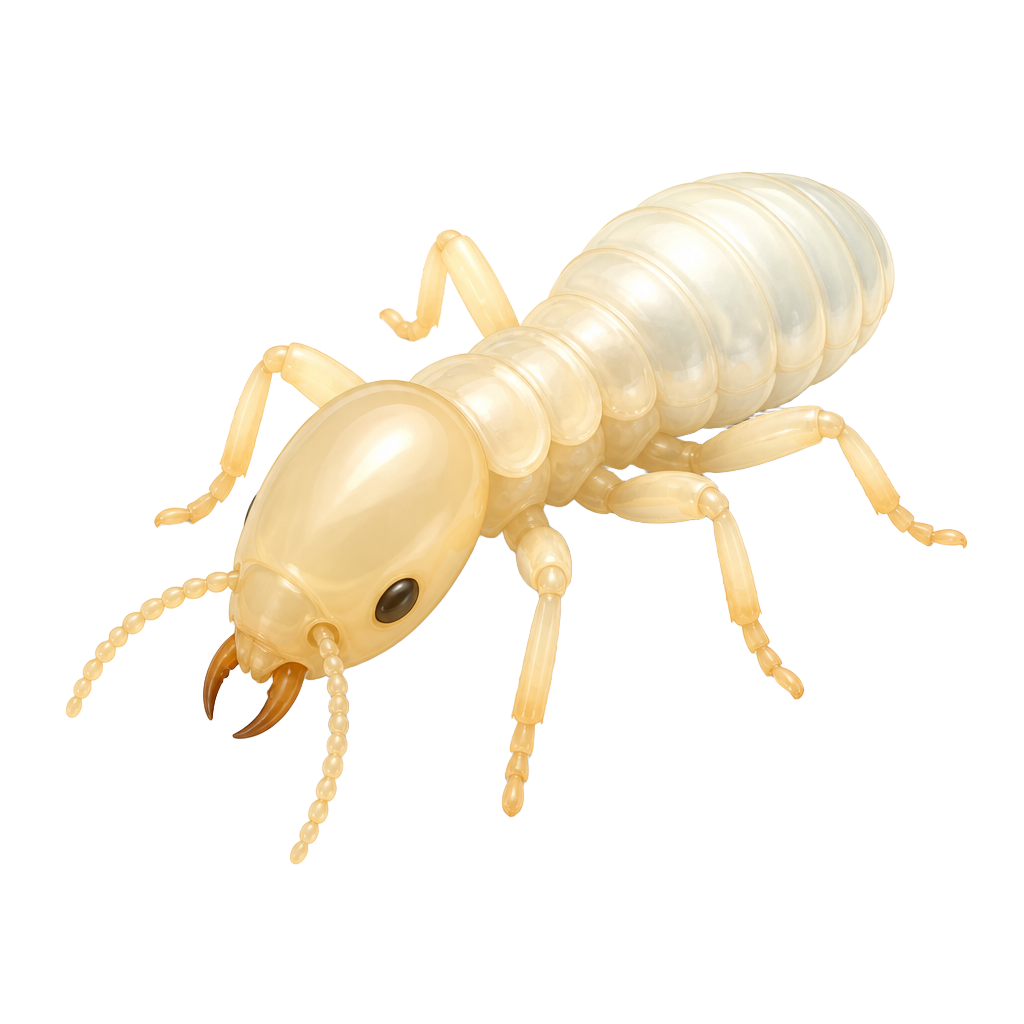
At a glance
- Category
- insect
- Seasonal activity
- Swarms typically in late summer and fall.
- Life cycle
- Small colonies of a few thousand members; slow but persistent damage.
- Common locations
- Attics · Wooden furniture · Roof rafters · Window frames
- Also known as
- attic termites
Entity relationships
Parent entity
Related entities
Key attributes
Risk profile
A quick read on how this pest scores across the four factors that matter most.
- Health risk
- None
- Property damage
- High
- Spread potential
- Moderate
- Treatment difficulty
- High
Seasonal activity
When this pest is most active across the calendar year.
Identification & habitat
Confirm what you're dealing with before choosing a treatment path.
How to identify
- 6-sided pellet-shaped frass
- Small round kick-out holes in wood
- Discarded wings on windowsills after fall swarms
Where they live
- Attic rafters
- Roof lines
- Window and door frames
- Antique furniture
- Structural beams
Signs of infestation
- Piles of pellet-shaped frass
- Small kick-out holes in wood
- Discarded wings
Behavior
- Live entirely within a single piece of wood
- Push frass out through kick holes
Reproduction
Small colonies with limited swarms; dispersal is slow but persistent.
Life cycle timeline
Every treatment plan must reach every stage — miss one, and the population rebuilds.
- Stage 145 days
Egg
Small colonies, few eggs per queen.
- Stage 212–24 months
Nymph
Develops through several instars.
- Stage 310+ years
Adult
Includes soldiers and reproductives.
Property damage
- Hollowed rafters
- Damaged antiques and hardwood furniture
Inspection checklist
- Attic sweep — look for pellet piles under rafters
- Inspect eaves, fascia, and window frames
- Check antique wooden furniture
- Tap trim boards for hollow sound
Professional treatment
The proven, licensed protocol our specialists use in the field.
- 1
Localized treatment
Foam or dust injection when infestation is limited and accessible.
- 2
Structural fumigation (Vikane®)
Whole-house tenting for widespread activity.
- 3
Heat remediation
Non-chemical alternative for isolated areas.
- 4
Wood repair and sealing
Prime and seal exposed exterior wood.
You can handle
- Paint and seal exterior wood
- Screen attic and gable vents
- Store firewood 20 ft away
Get professional help
- Confirmed pellets or kick holes
- Widespread attic activity
- Real estate transactions
What changes the price
- Localized vs. whole structure
- Home cubic footage
- Number of infested wood members
Prevention
Small habits keep drywood termites from coming back after treatment.
Prevent drywood termites
- Seal cracks in exterior wood
- Paint or varnish exposed wood
- Screen attic vents
Common myths
Bad advice makes infestations worse — here's the truth.
Fumigation ruins your home.
Vikane® leaves no residue and dissipates completely within 24 hours of clearance.
Frequently asked
Answers to the questions homeowners ask most about drywood termites.
Do I need fumigation?
Only when activity is widespread or hidden. Localized treatments work when the infestation is small and accessible.
Does fumigation kill subterranean termites too?
No — fumigation kills only insects present during the treatment; subterranean colonies must be treated separately.
Call a pro immediately if…
- Pellet piles beneath rafters
- Kick-out holes in trim
- Swarmers near fall windows
Answer your next question
Related Services
Related Costs
Related Calculators
Related Locations
Ready when you are
Deal with drywood termites the right way
Get a licensed pest specialist to handle it — often same-day, with a satisfaction guarantee.