Fleas
Ctenocephalides felis
A jumping bloodsucker whose eggs outnumber the adults you see.
Fleas feed on the blood of pets and humans, causing itching, allergic reactions, and secondary infections. A single female can lay 50 eggs per day.
At a glance
- Category
- insect
- Seasonal activity
- Peak: Summer and fall; year-round in warm climates.
- Life cycle
- Egg → larva → pupa → adult in 2–3 weeks; adults live 2–3 months.
- Common locations
- Carpets · Pet bedding · Upholstery · Yards
- Also known as
- cat flea
Entity relationships
Parent entity
Related entities
Key attributes
Risk profile
A quick read on how this pest scores across the four factors that matter most.
- Health risk
- Moderate
- Property damage
- None
- Spread potential
- High
- Treatment difficulty
- Moderate
Seasonal activity
When this pest is most active across the calendar year.
Identification & habitat
Confirm what you're dealing with before choosing a treatment path.
How to identify
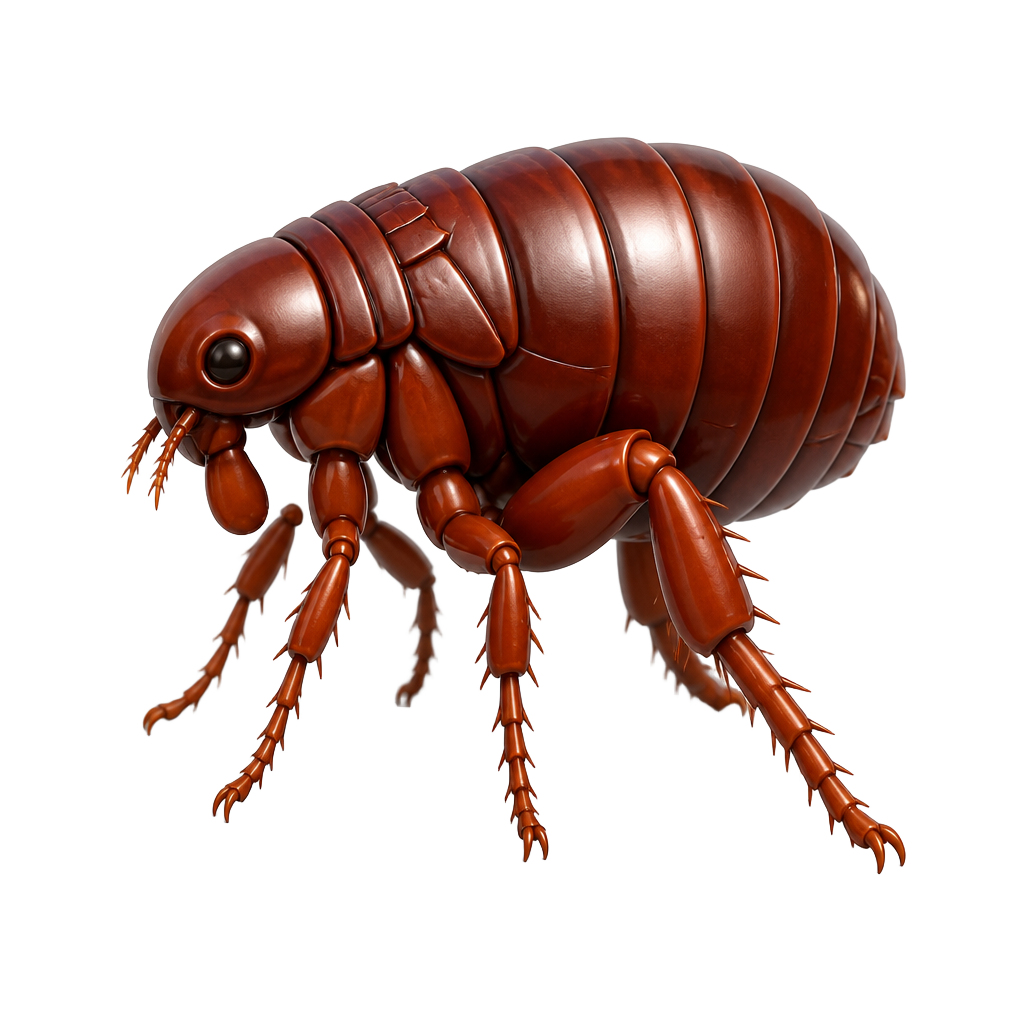
- 1/8" flattened side-to-side, dark reddish-brown
- Fast jumping when disturbed
- 'Flea dirt' — dark specks that turn red when wetted
Where they live
- Carpets
- Pet bedding
- Upholstery
- Cracks in flooring
- Shaded yard areas
Signs of infestation
- Pets scratching excessively
- "Flea dirt" (dark specks) in fur
- Small red bites on ankles
Behavior
- Pupae wait for vibration/heat to emerge — can persist for months
Reproduction
A single female lays 50 eggs per day; a full life cycle in 2–3 weeks under warm conditions.
Life cycle timeline
Every treatment plan must reach every stage — miss one, and the population rebuilds.
- Stage 11–10 days
Egg
Fall off host into carpet and bedding.
- Stage 25–20 days
Larva
Feeds on organic debris and adult flea feces.
- Stage 33 days – months
Pupa
Cocooned; waits for vibration/heat cue.
- Stage 42–3 months
Adult
Bites and reproduces.
Health risks
- Flea allergy dermatitis in pets
- Tapeworm transmission
- Bartonella (cat-scratch disease)
Inspection checklist
- White sock test — walk carpeted areas and check ankles
- Comb pets over a wet white paper towel
- Inspect pet resting areas and under furniture
- Check shaded yard areas where pets lie
Professional treatment
The proven, licensed protocol our specialists use in the field.
- 1
Vet-prescribed pet treatment
The most effective single intervention.
- 2
Vacuum + wash bedding
Vacuum daily, launder pet bedding at 60°C+.
- 3
IGR + adulticide indoors
Breaks the life cycle across all stages.
- 4
Yard barrier treatment
Focus on shaded pet resting areas.
You can handle
- Monthly vet flea prevention on pets
- Daily vacuuming during outbreak
Get professional help
- Multi-pet homes
- Yard-scale infestations
- Recurring problems after DIY
What changes the price
- Home square footage
- Yard treatment
- Pet count
- Follow-up visits
Prevention
Small habits keep fleas from coming back after treatment.
Prevent fleas
- Maintain pet flea prevention (monthly)
- Wash pet bedding weekly
- Vacuum carpets frequently
Common myths
Bad advice makes infestations worse — here's the truth.
One indoor treatment ends fleas.
Pupae can hatch weeks later; a second treatment at 14–21 days is essential.
Frequently asked
Answers to the questions homeowners ask most about fleas.
How do I get rid of fleas fast?
Combine vet-prescribed pet treatment with same-day indoor IGR/adulticide and daily vacuuming.
Are fleas dangerous?
They transmit tapeworms and Bartonella, and cause severe allergy dermatitis in pets.
Call a pro immediately if…
- Bites on ankles
- Pet scratching + flea dirt
- Yard flea activity
Answer your next question
Related Services
Related Calculators
Related Locations
Ready when you are
Deal with fleas the right way
Get a licensed pest specialist to handle it — often same-day, with a satisfaction guarantee.