Silverfish
Lepisma saccharina
A moisture-loving insect that eats books, glue, and starches.
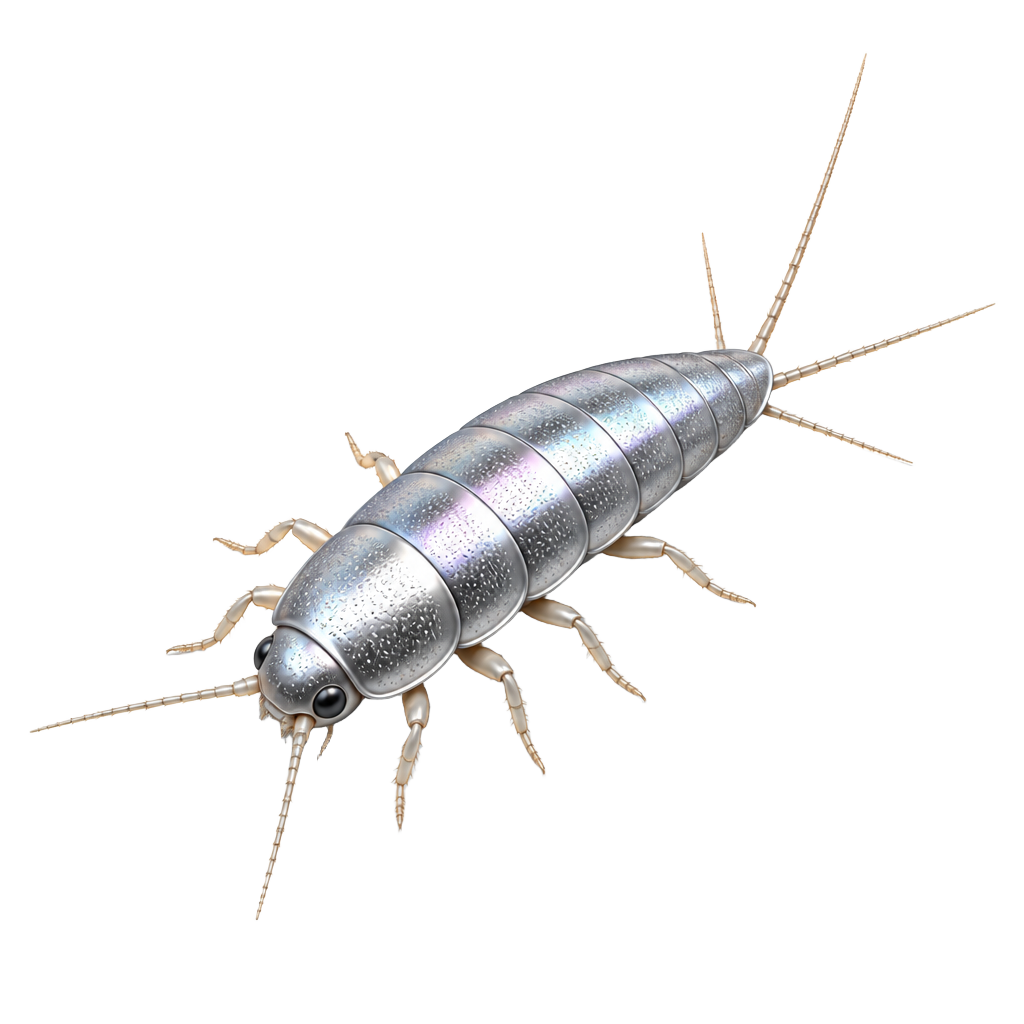
Silverfish are nocturnal insects that feed on starches, glues, and paper. Common in humid basements, attics, and bathrooms.
At a glance
- Category
- insect
- Seasonal activity
- Year-round in humid environments.
- Life cycle
- Live 2–8 years; slow reproducers but persistent.
- Common locations
- Basements · Attics · Bookshelves · Storage boxes · Bathrooms
- Also known as
- fish moths
Entity relationships
Parent entity
Related entities
Key attributes
Risk profile
A quick read on how this pest scores across the four factors that matter most.
- Health risk
- None
- Property damage
- Moderate
- Spread potential
- Low
- Treatment difficulty
- Low
Seasonal activity
When this pest is most active across the calendar year.
Identification & habitat
Confirm what you're dealing with before choosing a treatment path.
How to identify
- Silvery-gray teardrop shape with 3 tail bristles
- Fast wiggling movement under lights
- Yellow stains and irregular holes in paper
Where they live
- Basements
- Attics
- Bookshelves
- Under sinks
- Cardboard storage
Signs of infestation
- Yellow stains on paper
- Silvery insects that dart when disturbed
- Tiny pepper-like droppings
Behavior
- Nocturnal
- Hide during day in dark humid cracks
Reproduction
Live 2–8 years; slow reproducers but persistent.
Life cycle timeline
Every treatment plan must reach every stage — miss one, and the population rebuilds.
- Stage 13–6 weeks
Egg
Laid singly in cracks.
- Stage 23–24 months
Nymph
Molts continuously.
- Stage 32–8 years
Adult
Continues to molt throughout life.
Property damage
- Damage to books, wallpaper, and photographs
- Contamination of stored food
Inspection checklist
- Check humidity — target under 50% RH
- Inspect bookshelves and paper storage
- Look under sinks and around water heaters
- Sticky monitors in basements and closets
Professional treatment
The proven, licensed protocol our specialists use in the field.
- 1
Humidity reduction
Dehumidifier + ventilation.
- 2
Void dusting
Long-residual desiccant dust in wall voids and behind trim.
- 3
Perimeter residual
Interior baseboards and exterior foundation.
You can handle
- Dehumidifier in basement and bathrooms
- Store paper and clothing in sealed bins
Get professional help
- Chronic activity in bookshelves or archives
- Basement or crawlspace infestations
What changes the price
- Home humidity conditions
- Storage volume
- Whether crawlspace encapsulation is needed
Prevention
Small habits keep silverfish from coming back after treatment.
Prevent silverfish
- Reduce humidity below 50%
- Store paper in sealed plastic bins
- Repair leaks
Common myths
Bad advice makes infestations worse — here's the truth.
Silverfish come from clean homes.
They enter through cardboard, secondhand books, and old paper — humidity keeps them, not cleanliness.
Frequently asked
Answers to the questions homeowners ask most about silverfish.
Are silverfish harmful to my family?
No direct health risk, but they damage books, wallpaper, photos, and stored clothing.
Do I need chemicals?
Reducing humidity below 50% often eliminates them without any pesticide.
Call a pro immediately if…
- Damage to books or archives
- Chronic basement activity
Answer your next question
Related Services
Related Calculators
Related Locations
Ready when you are
Deal with silverfish the right way
Get a licensed pest specialist to handle it — often same-day, with a satisfaction guarantee.