Ticks
Ixodidae
Silent bloodsuckers that transmit more US pathogens than mosquitoes.
Ticks transmit Lyme disease, Rocky Mountain spotted fever, and other tick-borne illnesses. They live in tall grass and wooded edges.
At a glance
- Category
- arachnid
- Seasonal activity
- Peak: Spring through fall; nymphs active May–July.
- Life cycle
- Egg → larva → nymph → adult; each stage requires a blood meal.
- Common locations
- Tall grass · Leaf litter · Wooded edges · Pet resting areas
- Also known as
- deer tick, dog tick, lone star tick
Entity relationships
Parent entity
Related entities
Key attributes
Risk profile
A quick read on how this pest scores across the four factors that matter most.
- Health risk
- High
- Property damage
- None
- Spread potential
- Moderate
- Treatment difficulty
- Moderate
Seasonal activity
When this pest is most active across the calendar year.
Identification & habitat
Confirm what you're dealing with before choosing a treatment path.
How to identify
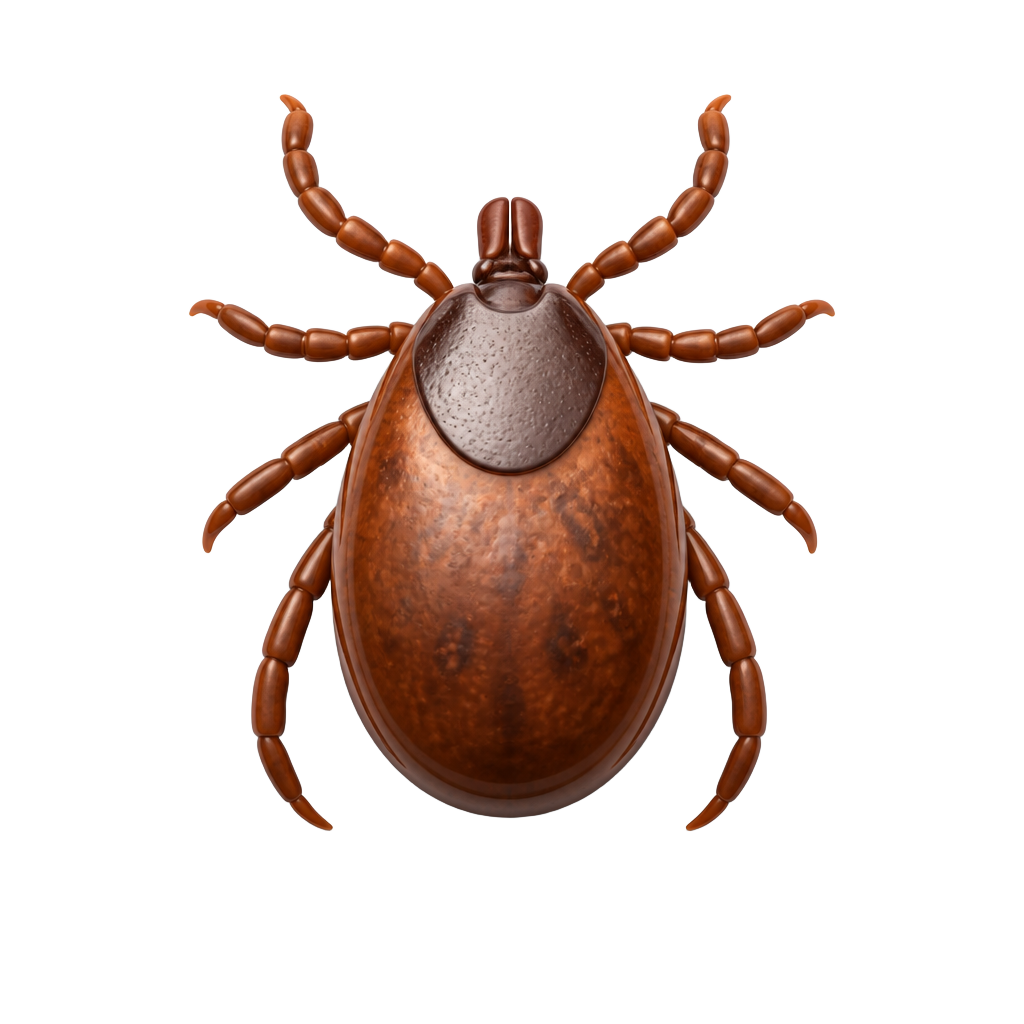
- Small, flat oval body — engorged after feeding
- Eight legs (arachnid, not insect)
- Attached to skin behind ears, waistline, or scalp
Where they live
- Tall grass
- Leaf litter
- Wooded edges
- Pet resting areas
- Deer trails
Signs of infestation
- Ticks on pets or humans after outdoor time
- High tick counts in leaf litter
- Nymphs the size of poppy seeds
Behavior
- 'Quest' from tips of vegetation with legs outstretched
- Detect CO₂ and heat from hosts
Reproduction
Egg → larva → nymph → adult; each stage requires a blood meal.
Life cycle timeline
Every treatment plan must reach every stage — miss one, and the population rebuilds.
- Stage 12 weeks
Egg
Laid in leaf litter.
- Stage 21 blood meal
Larva (6-legged)
Feeds on small mammals or birds.
- Stage 31 blood meal
Nymph (poppy-seed)
Peak Lyme transmission stage.
- Stage 41 blood meal + reproduces
Adult
Feeds on deer or large mammals.
Health risks
- Lyme disease
- Rocky Mountain spotted fever
- Alpha-gal syndrome
- Anaplasmosis
Inspection checklist
- Tick check after every yard or trail visit
- Inspect pets at every outdoor return
- Walk lawn perimeter for tall grass or leaf litter
- Look for deer paths near your property
Professional treatment
The proven, licensed protocol our specialists use in the field.
- 1
Landscape audit
Identify tick harborage — leaf litter, tall grass, brush.
- 2
Wood-chip barrier
3-ft chip strip between lawn and woods.
- 3
Granular yard treatment
Long-residual granular product across risk zones.
- 4
Tick tubes for rodents
Deliver treated cotton to mouse nests — the true reservoir.
You can handle
- Keep grass short, clear leaf litter
- Use permethrin-treated clothing for outdoor time
- Year-round pet tick prevention
Get professional help
- Wooded properties
- Homes with heavy deer traffic
- Households with young children
What changes the price
- Property size
- Wooded acreage
- Frequency of treatment
- Tick-tube installation
Prevention
Small habits keep ticks from coming back after treatment.
Prevent ticks
- Keep grass short and clear leaf litter
- Create 3-ft wood-chip barrier between lawn and woods
- Use tick prevention on pets year-round
Common myths
Bad advice makes infestations worse — here's the truth.
You need to burn a tick off.
Use fine tweezers, pull straight up. Burning increases infection risk.
Frequently asked
Answers to the questions homeowners ask most about ticks.
How long does a tick need to be attached to transmit Lyme?
Studies suggest 24–48 hours for Lyme, but other pathogens transmit faster — remove ASAP.
Should I save the tick after removal?
Yes — dry it in a bag and label the date; it can be tested if symptoms appear.
Call a pro immediately if…
- Wooded property with children/pets
- Frequent yard tick encounters
- Bullseye rash or flu-like symptoms after a bite
Answer your next question
Related Services
Related Calculators
Related Locations
Ready when you are
Deal with ticks the right way
Get a licensed pest specialist to handle it — often same-day, with a satisfaction guarantee.