Wasps
Vespidae
Beneficial pollinators — until a nest is next to your door.
Wasps deliver painful stings and are aggressive when defending nests. Nests near doorways, playsets, or high-traffic areas require prompt removal.
At a glance
- Category
- insect
- Seasonal activity
- Peak: Mid-summer through fall.
- Life cycle
- Annual colonies collapse after first frost; queens overwinter.
- Common locations
- Eaves · Attics · Sheds · Underground burrows (yellowjackets)
- Also known as
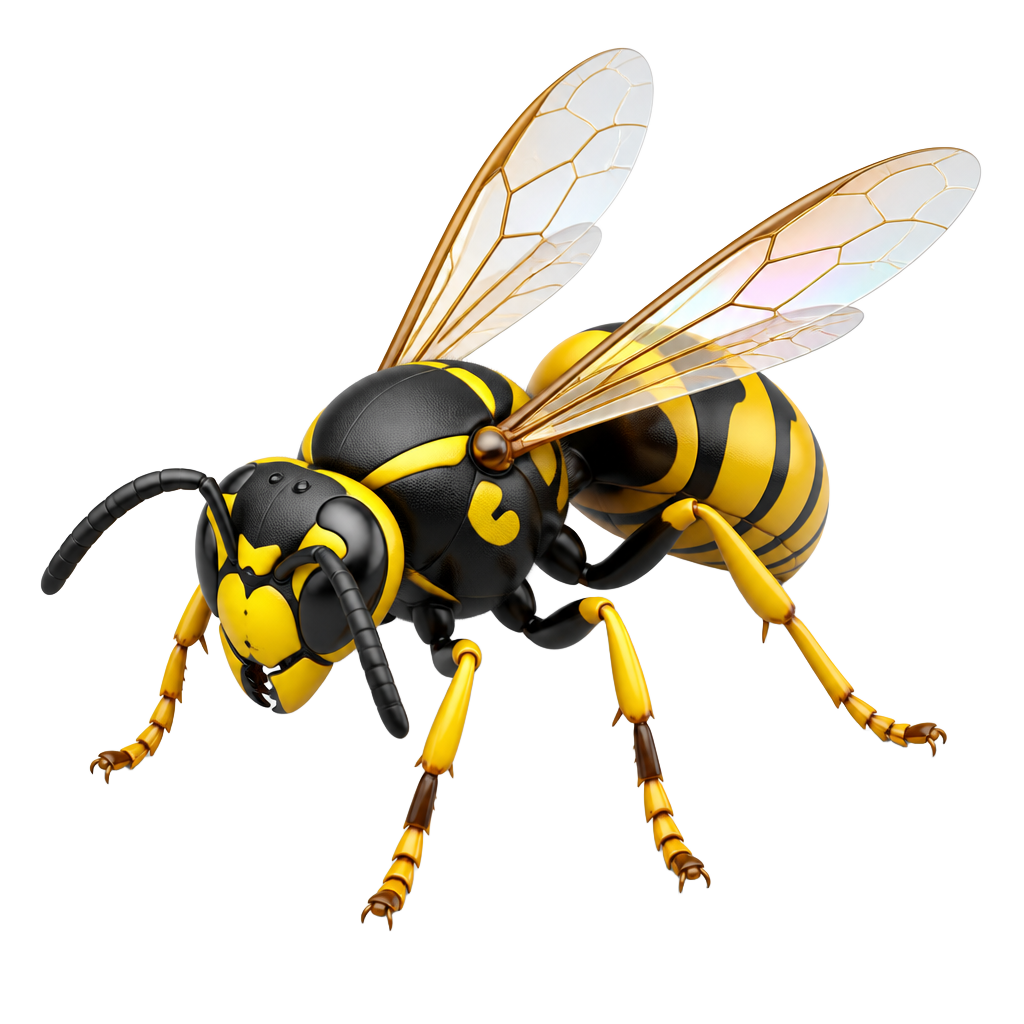
- yellowjackets, hornets, paper wasps
Entity relationships
Parent entity
Child entities
Related entities
Key attributes
Risk profile
A quick read on how this pest scores across the four factors that matter most.
- Health risk
- High
- Property damage
- Low
- Spread potential
- Moderate
- Treatment difficulty
- Moderate
Seasonal activity
When this pest is most active across the calendar year.
Identification & habitat
Confirm what you're dealing with before choosing a treatment path.
How to identify
- Narrow waist, hairless body
- Paper nests under eaves, in shrubs, or underground
- Aerial traffic around a single hole or nest
Where they live
- Eaves and soffits
- Attic and wall voids
- Sheds
- Ground burrows (yellowjackets)
Signs of infestation
- Visible paper nests under eaves
- Wasps entering wall voids
- Aerial traffic around a specific spot
Behavior
- Non-aggressive when foraging; extremely defensive near nest
- Colonies collapse after first hard frost
Reproduction
Annual colonies collapse after first frost; queens overwinter.
Life cycle timeline
Every treatment plan must reach every stage — miss one, and the population rebuilds.
- Stage 1Emerges spring
Overwintered queen
Builds starter nest and lays first workers.
- Stage 2May – August
Worker phase
Colony grows to peak size.
- Stage 3September – October
Reproductive phase
New queens produced; colony most aggressive.
- Stage 4First hard frost
Colony collapse
Only mated queens overwinter.
Health risks
- Painful stings
- Anaphylaxis for allergic individuals
- Multi-sting swarms
Property damage
- Structural nests in wall voids and soffits
Inspection checklist
- Watch for aerial traffic around eaves and soffits
- Inspect sheds, playsets, and gas grills after storage
- Scan yard for ground holes with insect traffic
- Look for paper nests under decks and railings
Professional treatment
The proven, licensed protocol our specialists use in the field.
- 1
Positive nest identification
Species and location determine treatment approach.
- 2
Direct nest treatment
Dust or aerosol applied at dusk when colony is inside.
- 3
Nest removal
Physical removal after knockdown to prevent secondary pests.
- 4
Void injection
For nests hidden in wall voids or soffits.
You can handle
- Small early-season paper wasp nests with dusk treatment
- Sealing exterior gaps
Get professional help
- Any nest in a wall void
- Yellowjacket ground nests
- Nests near doorways, children, or allergic individuals
What changes the price
- Nest location
- Access equipment needed
- Recurring perimeter program
Prevention
Small habits keep wasps from coming back after treatment.
Prevent wasps
- Inspect eaves and soffits monthly in spring
- Seal entry points to wall voids
- Keep trash cans tightly closed
Common myths
Bad advice makes infestations worse — here's the truth.
Wasps die after one sting.
Only honeybees die after stinging. Wasps can sting repeatedly.
Frequently asked
Answers to the questions homeowners ask most about wasps.
How do I tell a wasp nest from a bee hive?
Wasp nests are paper-like with visible cells; honeybee colonies build waxy vertical combs.
Will the nest come back next year?
Not the same nest — but the location may attract new queens; treat and remove to prevent re-nesting.
Call a pro immediately if…
- Nest within 20 ft of a doorway
- Wall-void or attic nest
- Allergic household member
Answer your next question
Related Services
Related Calculators
Related Locations
Ready when you are
Deal with wasps the right way
Get a licensed pest specialist to handle it — often same-day, with a satisfaction guarantee.